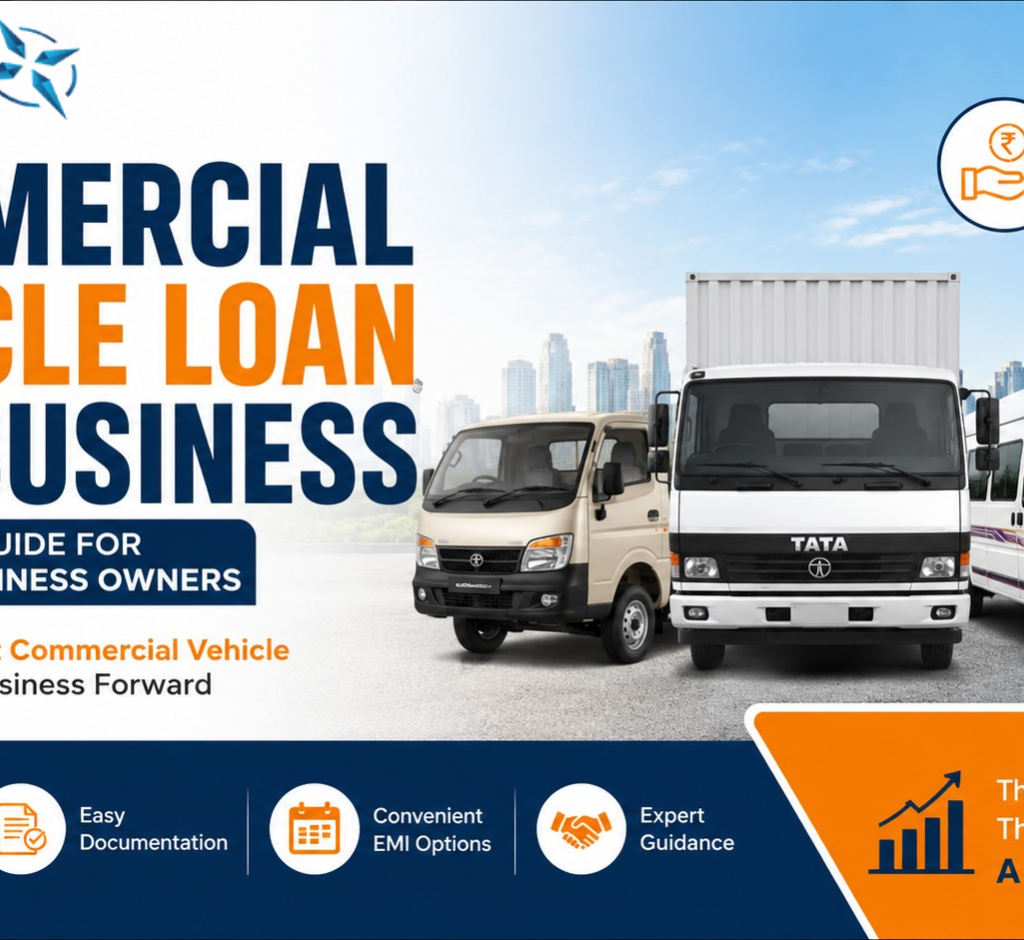
Introduction
Starting a new business is exciting, but it also involves several important financial decisions. If your business depends on transportation, one of the biggest early decisions can be purchasing your first commercial vehicle.
Whether you are planning to start a transport business, delivery service, travel business, logistics operation, or another vehicle-based business, purchasing a commercial vehicle requires careful financial planning.
A Commercial Vehicle Loan for Business can help eligible first-time business owners finance a vehicle through structured repayments instead of arranging the entire purchase cost upfront.
From trucks and pickups to buses and Tempo Travellers, choosing the right vehicle and financing structure can help you build a stronger foundation for your business.
What Is a Commercial Vehicle Loan?
A Commercial Vehicle Loan is financing designed to help eligible individuals and businesses purchase vehicles intended for commercial or business use.
Depending on the lender and applicant profile, financing may be available for vehicles such as:
- Trucks
- Mini trucks
- Pickups
- Buses
- Tempo Travellers
- Light Commercial Vehicles
- Heavy Commercial Vehicles
- Delivery vehicles
- Other eligible commercial vehicles
The loan amount, tenure, interest rate, down payment and other terms depend on the lender’s policies and the applicant’s eligibility.
Why Do First-Time Business Owners Need Commercial Vehicle Finance?
For a new business, cash flow is extremely important.
If you use most of your available capital to purchase a vehicle, you may have less money available for:
- Fuel
- Staff
- Maintenance
- Insurance
- Inventory
- Marketing
- Office expenses
- Working capital
- Business expansion
Commercial vehicle financing can help eligible business owners structure the vehicle purchase while keeping some funds available for other business requirements.
Who Can Apply for a Commercial Vehicle Loan?
A Commercial Vehicle Loan may be suitable for eligible:
- First-time entrepreneurs
- Transport business owners
- Fleet operators
- Logistics businesses
- Travel businesses
- Delivery businesses
- Contractors
- Traders
- Shop owners
- Self-employed professionals
- Existing business owners
The exact eligibility criteria vary between lenders.
What Type of Commercial Vehicle Should You Buy?
Your first vehicle should be selected according to your actual business requirement rather than simply choosing the largest or most expensive option.
Truck
Suitable for businesses involved in goods transportation and logistics.
Pickup
Useful for local goods transportation, deliveries and small-scale logistics.
Tempo Traveller
Can be suitable for travel operators, employee transportation, tourism and passenger-related businesses.
Bus
May be considered for passenger transportation, staff transportation and other eligible commercial applications.
Light Commercial Vehicle
Can be useful for delivery businesses, local transportation and small-scale commercial operations.
Before selecting the vehicle, consider your expected workload, routes, customers, operating costs and revenue potential.
How to Plan Your First Commercial Vehicle Purchase
Step 1: Define Your Business Model
Understand exactly how the vehicle will generate revenue.
For example:
- Goods transportation
- Passenger transportation
- Local deliveries
- Tourism
- Employee transportation
- Logistics
- Construction-related transportation
Step 2: Estimate Your Expected Revenue
Calculate how much business you realistically expect the vehicle to generate each month.
Step 3: Calculate Operating Expenses
Consider:
- Fuel
- Driver salary
- Maintenance
- Insurance
- Permit-related expenses
- Parking
- Tolls
- Repairs
- Other operating costs
Step 4: Determine Your Budget
Calculate the vehicle’s complete purchase cost and decide how much you can contribute upfront.
Step 5: Explore Commercial Vehicle Finance
Compare suitable financing options based on your business profile and lender eligibility.
Step 6: Plan Your EMI
Choose a repayment structure that fits your expected business cash flow.
How Does a Commercial Vehicle Loan Work?
The process generally involves several stages.
1. Vehicle Selection
Choose the commercial vehicle according to your business requirements.
2. Eligibility Assessment
The lender reviews your financial and business profile.
3. Documentation
Submit the required KYC, income, business and vehicle-related documents.
4. Loan Assessment
The lender evaluates the application and determines the eligible financing structure.
5. Approval
If the application meets the applicable criteria, the loan can be sanctioned.
6. Disbursement
After completing the required formalities, the approved amount is disbursed according to the lender’s process.
Documents Required for a Commercial Vehicle Loan
The exact documentation depends on the lender and applicant profile.
Common documents may include:
KYC Documents
- Aadhaar Card
- PAN Card
- Address Proof
- Photograph
Business Documents
Depending on the business structure:
- Business proof
- GST registration, where applicable
- Shop and establishment documents
- Business registration
- Other applicable licences
Financial Documents
Depending on the applicant:
- Bank statements
- Income Tax Returns
- Financial statements
- Business income documents
Vehicle Documents
- Vehicle quotation
- Vehicle details
- Other documents requested by the lender
Keeping your documents ready can help make the application process more organized.
How Much Commercial Vehicle Loan Can You Get?
There is no fixed loan amount applicable to every applicant.
The eligible financing amount can depend on:
- Vehicle price
- Applicant’s income
- Business profile
- Banking history
- Credit profile
- Existing financial obligations
- Down payment
- Vehicle type
- Lender’s internal policies
The final sanctioned amount is determined by the respective bank or NBFC after assessing the application.
How Should a First-Time Business Owner Plan the EMI?
EMI planning is one of the most important parts of commercial vehicle finance.
A vehicle loan EMI should be considered alongside your expected business income and operating expenses.
For example, if your vehicle generates monthly revenue, you should consider:
Monthly Revenue
minus
Fuel + Driver + Maintenance + Tolls + Other Expenses
to understand the cash available for your vehicle EMI and other business requirements.
This helps you create a more realistic business-finance plan.
Commercial Vehicle Loan vs Buying With Cash
A first-time business owner may wonder whether to purchase a commercial vehicle entirely with savings or use financing.
| Commercial Vehicle Loan | Buying With Cash |
|---|---|
| Allows structured repayment | Large upfront payment |
| Can preserve some business liquidity | Reduces available cash |
| EMI needs to be planned | No loan EMI |
| Suitable for eligible borrowers | Depends on available capital |
| Financing terms depend on lender | No financing process |
The right choice depends on your available capital, business cash flow and financial goals.
How Commercial Vehicle Finance Can Support Business Growth
A commercial vehicle can become an important business asset.
For example, a transport operator can use a truck to serve more customers, while a travel operator can use a Tempo Traveller to expand passenger services.
A well-planned vehicle purchase can potentially help with:
Increased Business Capacity
A vehicle can allow you to handle additional work.
Better Customer Service
Reliable transportation can improve delivery and service efficiency.
New Business Opportunities
A commercial vehicle can help you enter new routes, markets or service categories.
Business Expansion
Once the first vehicle is operating successfully, you may eventually consider expanding your fleet.
Mistakes First-Time Business Owners Should Avoid
Choosing a Vehicle Without Understanding Demand
Always assess whether sufficient business demand exists for the vehicle.
Ignoring Operating Costs
The purchase price is only one part of the total cost.
Selecting an EMI Without Checking Cash Flow
Your EMI should be considered alongside your expected monthly revenue and expenses.
Using All Your Business Capital
Keeping adequate working capital can be important for day-to-day operations.
Not Comparing Financing Options
Different lenders can have different eligibility criteria and financing structures.
Commercial Vehicle Loan for Business in Pune
Pune has a growing ecosystem of entrepreneurs, logistics operators, travel businesses, traders and service providers.
If you are planning to purchase your first commercial vehicle in Pune, exploring a Commercial Vehicle Loan for Business can help you understand suitable financing options based on your business and financial profile.
Northwest Capital assists eligible customers across Pune and Maharashtra through a network of banks and NBFC partners.
Why Choose Northwest Capital?
At Northwest Capital, we help business owners explore suitable commercial vehicle financing options according to their requirements and eligibility.
Why Customers Choose Us
- 26+ Years of Industry Experience
- 50+ Bank & NBFC Partners
- Commercial Vehicle Loan assistance
- Professional guidance
- Documentation support
- Transparent consultation
- Processing assistance
- Customer-focused service
- Pune & Maharashtra coverage
Whether you are purchasing your first truck, pickup, bus or Tempo Traveller, our team can help you explore suitable financing options.
First Commercial Vehicle Loan Checklist
Before applying, keep this checklist ready:
✅ Identify your business requirement
✅ Choose the right commercial vehicle
✅ Calculate the on-road cost
✅ Estimate monthly business revenue
✅ Calculate operating expenses
✅ Decide your comfortable down payment
✅ Review existing financial commitments
✅ Prepare KYC and business documents
✅ Compare suitable financing options
✅ Choose an EMI that fits your business cash flow
Frequently Asked Questions
1. Can a first-time business owner get a Commercial Vehicle Loan?
Yes, eligible first-time business owners can explore Commercial Vehicle Loan options, subject to lender-specific criteria.
2. Which vehicles can be financed?
Depending on the lender, financing may be available for eligible trucks, pickups, buses, Tempo Travellers and other commercial vehicles.
3. Can a new entrepreneur apply for commercial vehicle finance?
Yes, new entrepreneurs can explore financing options based on their business profile, financial information and applicable lender criteria.
4. What documents are required?
Common documents include KYC, bank statements, income or financial documents, business proof and vehicle-related documents.
5. How much down payment is required?
The required contribution depends on the vehicle, lender, applicant profile and financing structure.
6. Can I use a Commercial Vehicle Loan for a Tempo Traveller?
Eligible applicants can explore Tempo Traveller financing based on the vehicle and lender’s applicable criteria.
7. Can self-employed individuals apply?
Yes. Self-employed professionals and business owners can explore commercial vehicle financing based on their eligibility.
8. Is Commercial Vehicle Finance available in Pune?
Yes. Eligible customers in Pune and Maharashtra can explore commercial vehicle financing through banks, NBFCs and financial consultants.
Conclusion
For a first-time business owner, purchasing a commercial vehicle is an important investment. The right vehicle can support daily operations, customer service and future business growth.
A Commercial Vehicle Loan for Business can help eligible entrepreneurs finance their vehicle through structured repayments while planning their available business capital more effectively.
Before applying, understand your business model, estimate revenue and operating costs, choose the right vehicle, calculate a comfortable EMI and compare suitable financing options.
If you are planning to purchase your first commercial vehicle in Pune or Maharashtra, Northwest Capital can help you explore financing options through its network of 50+ banks and NBFC partners.
Choose the right vehicle, plan your finance carefully, and take the next step toward building your business.