Need money for your business, a wedding, education, a medical expense or home renovation? Many people in Pune turn to one of three options: car refinance, a personal loan or a loan against property (LAP). They can all provide funds, but they differ in security, cost, paperwork and risk. This guide compares car refinance vs personal loan and loan against property in simple terms, so you can pick the one that fits your need.
The Three Options in Brief
Car Refinance
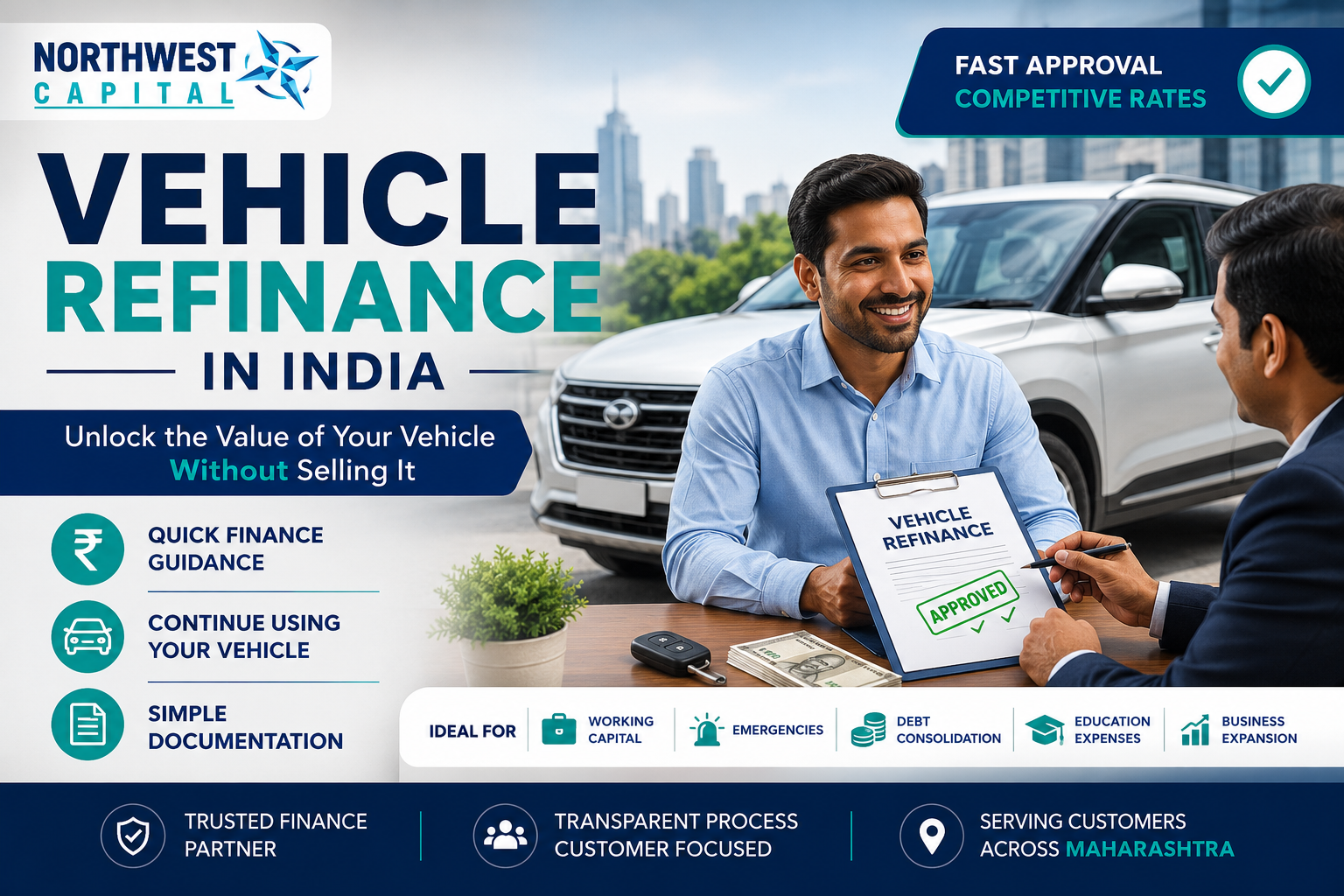
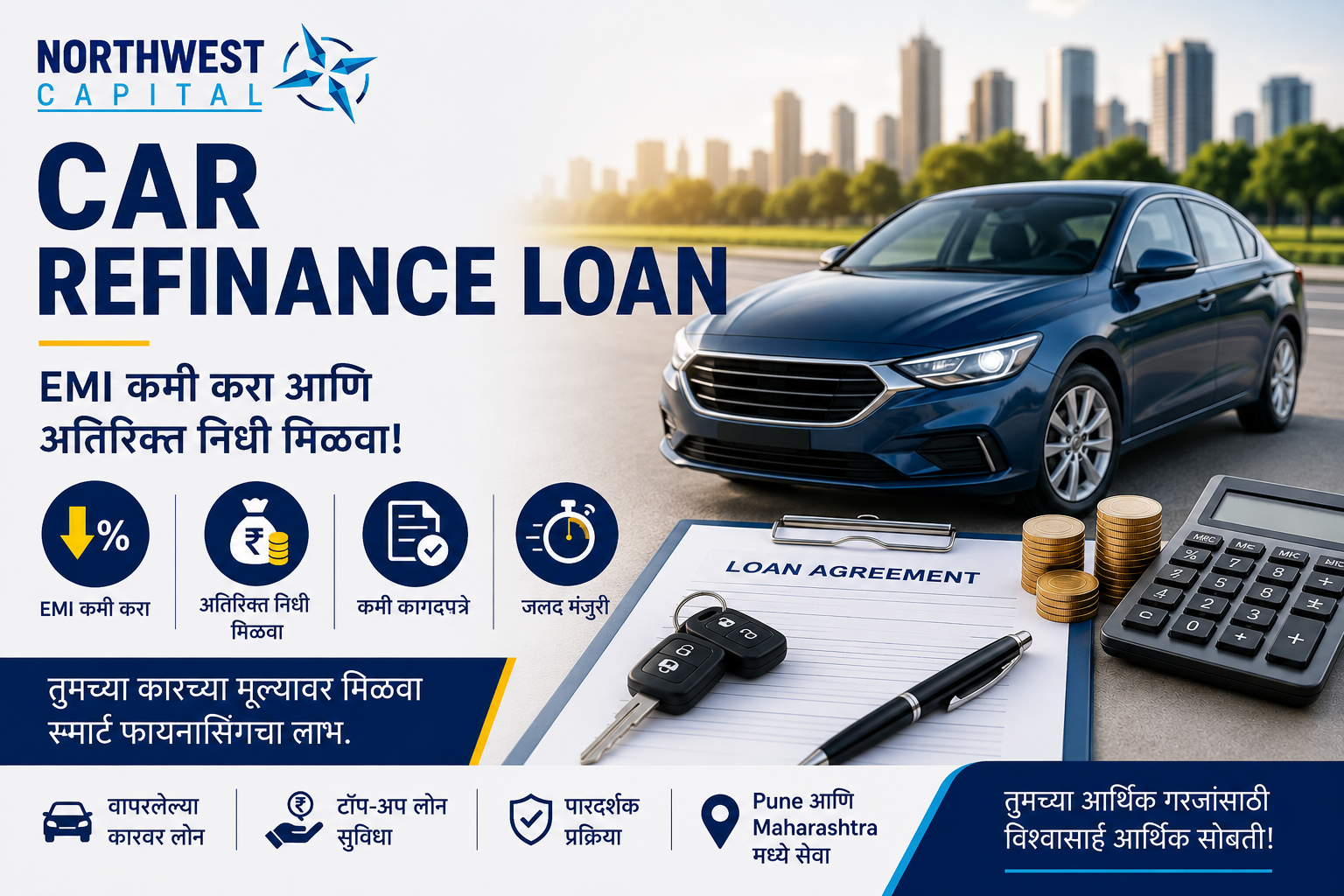
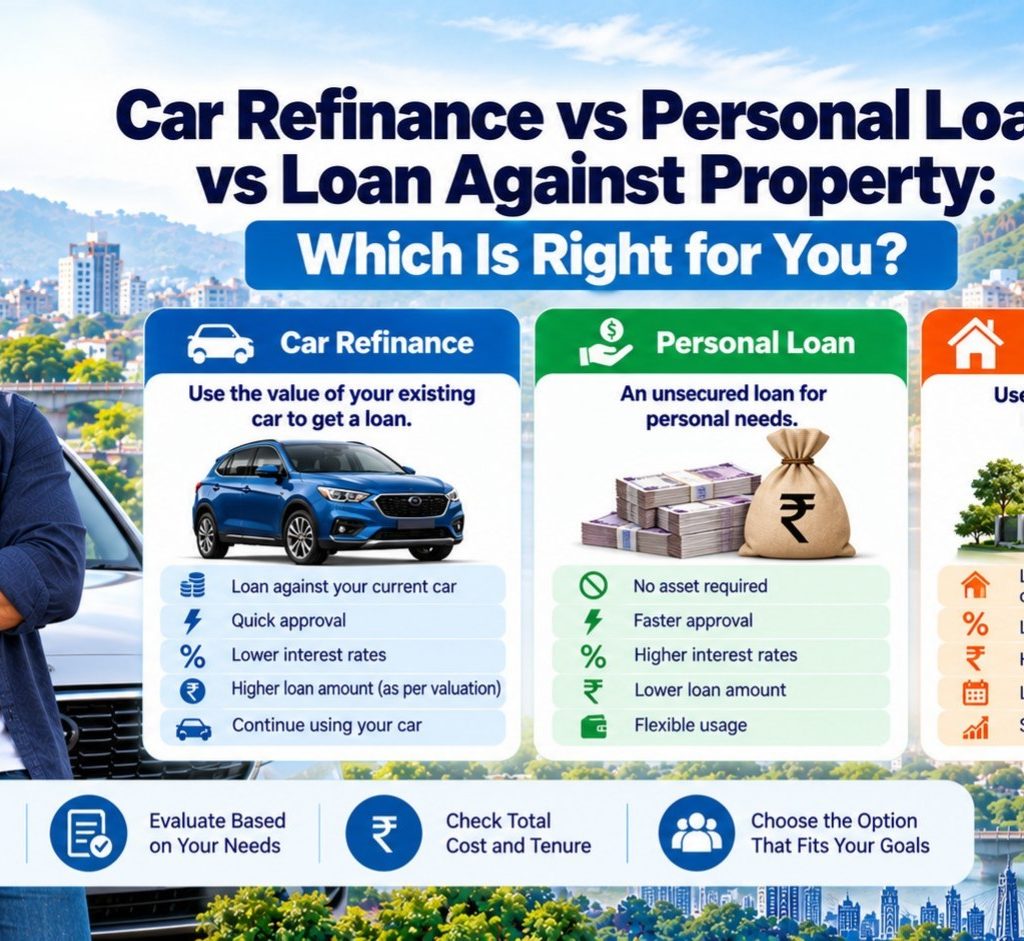
Car refinance lets an eligible owner raise funds against the current value of a car they already own, with or without an existing car loan. The car acts as security, and you can usually continue using it as per the loan terms. Read the details in our Car Refinance in Pune & Maharashtra guide.
Personal Loan
A personal loan is unsecured. The lender decides based on your income and credit profile, and you do not pledge any asset. Funds can be used for almost any purpose.
Loan Against Property (LAP)
With LAP, you pledge a residential or commercial property as security. Because the asset is usually valuable, the loan amount can be larger and the tenure longer.
Side-by-Side Comparison
| Factor | Car Refinance | Personal Loan | Loan Against Property |
|---|---|---|---|
| Security | Your car | None | Your property |
| Typical loan size | Linked to the car’s value | Linked to your income | Linked to the property’s value; often larger |
| Interest rate | Generally lower than unsecured loans | Generally higher | Often lower, as it is secured by property |
| Tenure | Shorter to medium | Shorter | Often longer |
| Paperwork and time | Moderate; includes car valuation | Usually simpler and faster | More detailed; includes property valuation and legal checks |
| Asset at risk if you default | The car | No asset, but credit score and recovery action | The property |
These are general patterns. Actual terms depend on each lender’s policy and your profile.
When Car Refinance May Be the Right Choice
- You own a car and need funds without selling it.
- You do not want to put your home or other property at risk.
- You want a lower cost than an unsecured loan could offer.
- Your requirement fits within what your car’s value can support.
At Northwest Capital, eligible cases may be considered for financing of up to 150%–180%, subject to vehicle valuation, borrower eligibility and lender terms. Refinance or top-up cases on an existing car loan are generally considered after 12 EMIs have been completed.
When a Personal Loan May Be the Right Choice
- You need a smaller amount, quickly.
- You do not own a car or property you want to use as security.
- You can repay in a short period and are comfortable with a higher rate.
For a cost comparison on cars, read Used Car Loan vs Personal Loan: Which Costs Less?
When Loan Against Property May Be the Right Choice
- You need a large amount, for example for business expansion.
- You own property with a clear title and are comfortable pledging it.
- You prefer a longer tenure to keep the EMI low.
Keep in mind that LAP usually involves more documents, property valuation and legal verification, so it can take longer. If repayments are missed, the property you pledged is at risk, so think carefully about this before you choose it.
Questions to Ask Before You Decide
- How much money do I actually need, and for how long?
- Which asset, if any, am I comfortable putting at risk?
- How quickly do I need the funds?
- What will my total repayment be, including all fees?
- Can my monthly income comfortably handle the EMI?
Costs to Compare Across All Three
- Interest rate and how it is calculated
- Processing fee and documentation or valuation charges
- Prepayment and foreclosure charges
- Insurance requirements
- Total interest paid over the full tenure
Different lenders, including banks and NBFCs, price these differently. Our post on bank vs NBFC used car loans explains how to think about the lender type.
For Business Owners and the Self-Employed
If you run a business and need working capital, each option has trade-offs. Car refinance can be a way to raise funds without pledging property, while LAP can suit larger needs. Lenders assess business income through your ITR and bank statements, as explained in our guide on a self-employed car loan in Pune.
How Northwest Capital Can Help
With 26+ years of experience and 50+ bank and NBFC partners, Northwest Capital helps eligible customers across Pune and Maharashtra understand which funding route fits their situation and compare suitable lenders. We aim to explain the full cost and risk before you commit.
Frequently Asked Questions
1. Is car refinance cheaper than a personal loan?
Often, yes, because car refinance is secured by your vehicle, and secured loans generally carry lower rates than unsecured ones. Actual rates depend on the lender and your profile.
2. Do I lose my car if I take car refinance?
You generally continue to use your car as per the loan terms. The lender records its interest on the vehicle until the loan is closed. If repayments are not made, the lender may take action as per the agreement.
3. Which gives the largest amount?
Loan against property can often provide larger amounts, as property values are usually higher than a car’s value. The eligible amount still depends on valuation and your repayment capacity.
4. Which option is the fastest?
Personal loans are often quicker because they need fewer checks, while LAP usually takes longer due to property verification. Timelines vary by lender.
5. Can I use car refinance for business needs?
Yes, eligible business owners and self-employed professionals can explore car refinance for working capital and other eligible needs, subject to lender terms.
Not sure which option suits you? Talk to Northwest Capital and compare suitable options before you decide. Contact us to get started.
Disclaimer: This article is for general information only and is not a loan offer or a guarantee of approval. Eligibility, loan amount, interest rates, fees and approval depend on the respective lender’s policies and the applicant’s profile.