Northwest Capital - Premium Header Block Updated
Pune, Maharashtra
+91 92250 04960

Nortwest Capital

Northwest Capital – Your Own Kuber – is a trusted financial services company with 25+ years of expertise in Home Loans, Loan Against Property, Car Loans, Business Loans, Used Car Loans, and Insurance Advisory. With 47+ Banks & NBFCs as partners and a Pan-India presence, we are committed to delivering quick, reliable, and customer-first financial solutions.

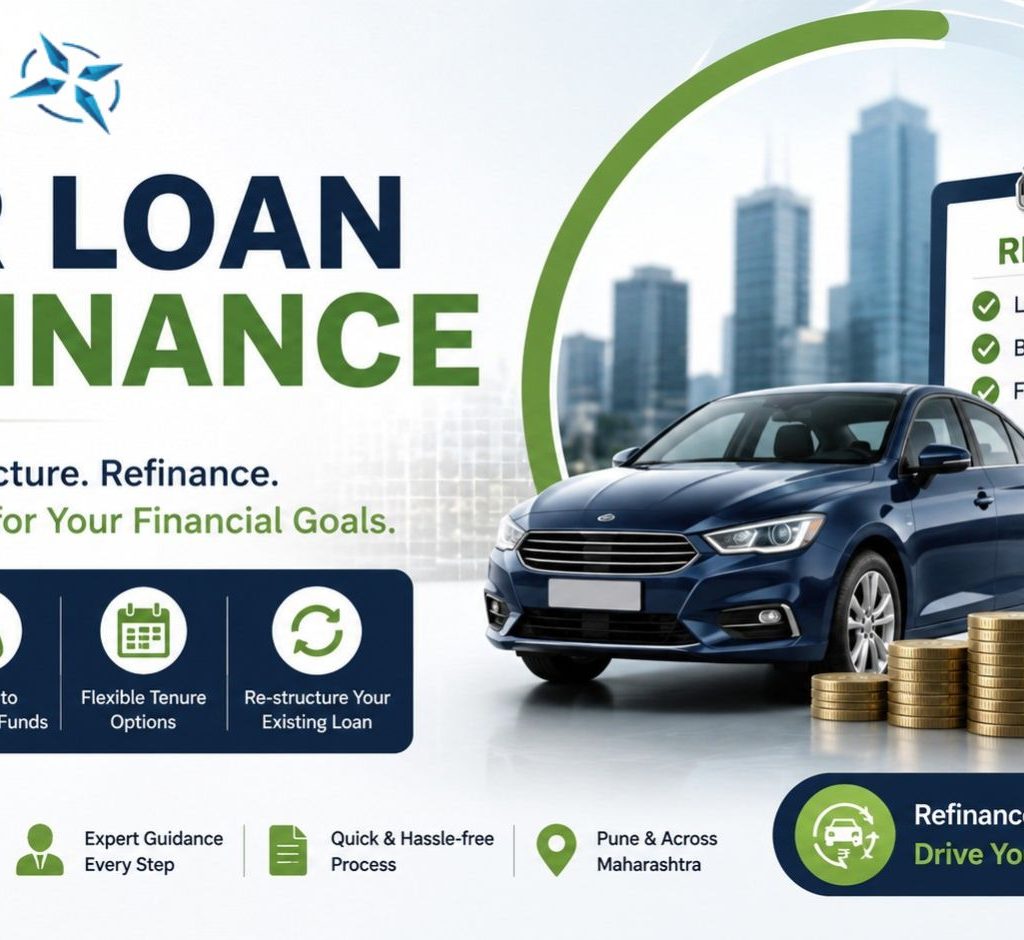
Car Refinance in Pune – Unlock Your Car’s Value and Explore Flexible Finance Options
Uncategorized

How Car Refinance in Pune Can Help You Unlock the Value of Your Car

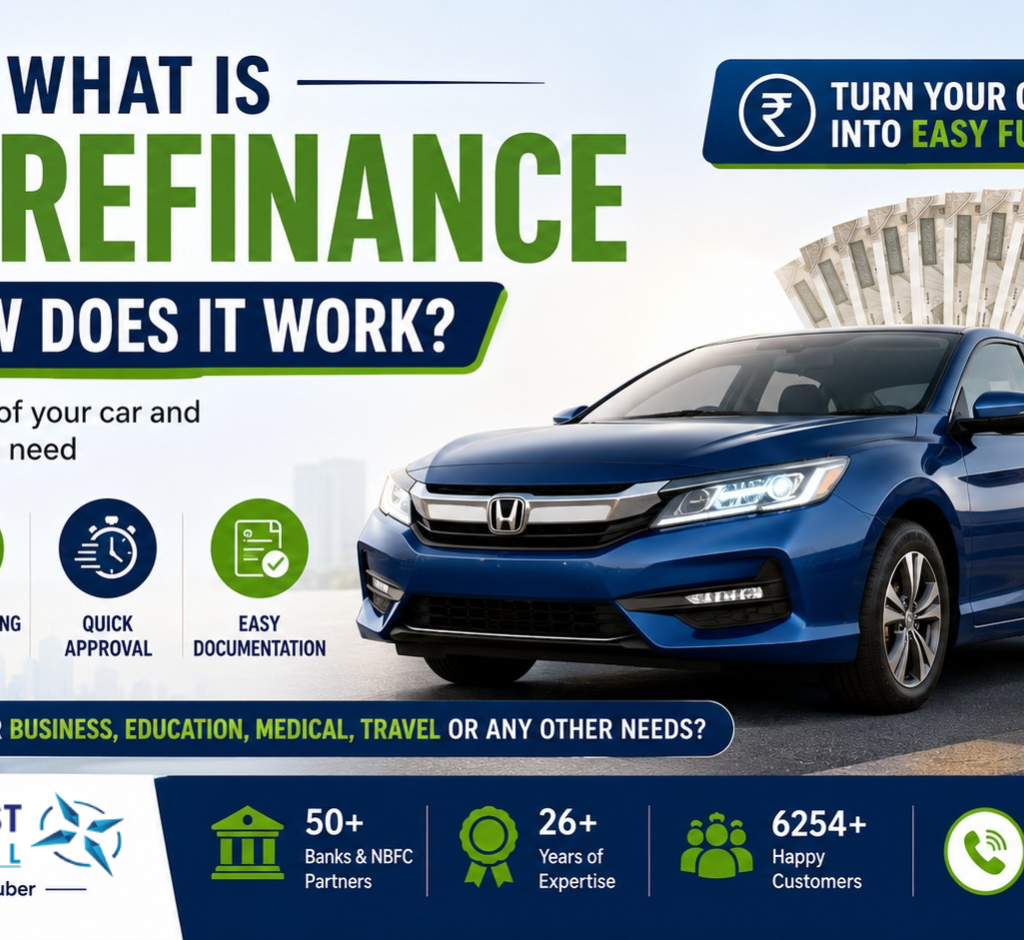
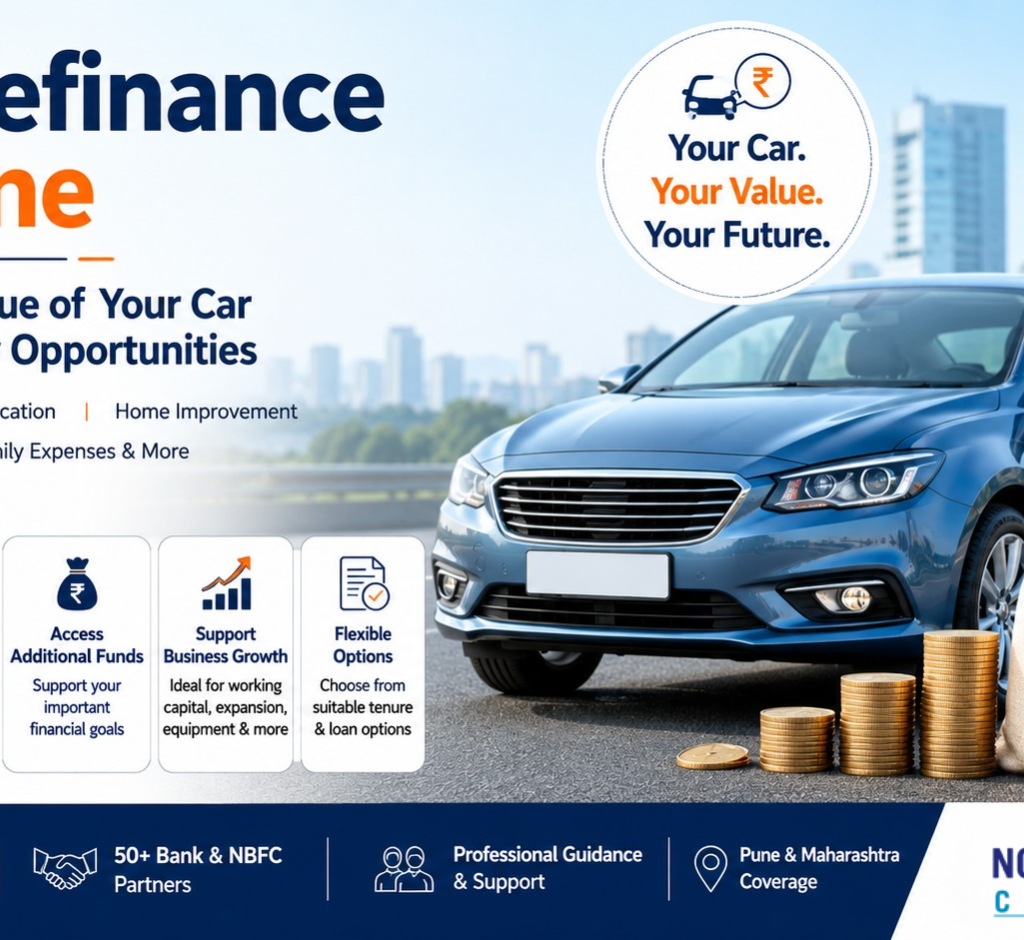
If you own a car in Pune, your vehicle can be more than just a convenient way to travel. It can also represent a valuable financial asset. When you need additional funds for business growth, family requirements, education, home improvement, or other important financial goals, Car Refinance in Pune can be an option worth exploring. Many vehicle owners are familiar with car loans for purchasing a vehicle, but fewer understand how the value of an existing car can potentially support additional financing. With the right refinance option, eligible vehicle owners can explore funding while continuing to use their car for everyday personal or professional requirements. Pune has a growing community of salaried employees, entrepreneurs, self-employed professionals, business owners, traders, and families who depend on cars for daily mobility. For such customers, understanding Car Refinance in Pune can open up new possibilities for financial planning. This guide explains how car refinancing works, its potential benefits, eligibility, documents, the application process, and how you can explore suitable options for your financial requirements. What Is Car Refinance? Car Refinance is a financing facility through which an eligible vehicle owner can explore a loan against an existing car. Instead of selling the vehicle to arrange funds, the owner can use the eligible value of the car to obtain financing, subject to the lender’s criteria. The lender may assess several factors, including: The final loan amount, interest rate, tenure, and other terms are determined by the respective lender. How Does Car Refinance in Pune Work? The process of Car Refinance in Pune generally follows a structured approach. Step 1: Understand Your Financial Requirement Start by identifying how much funding you need and how the funds will support your financial objective. Your requirement could relate to: Step 2: Check Vehicle Eligibility Your car is evaluated based on its age, model, condition, current market value, and other applicable factors. Step 3: Vehicle Valuation A lender or authorized representative may assess the vehicle to determine its eligible value. Step 4: Submit Documents Personal, financial, vehicle, and existing loan-related documents are submitted as required. Step 5: Eligibility Assessment The lender evaluates the applicant’s income, repayment capacity, credit profile, vehicle value, and other relevant details. Step 6: Approval Once the application meets the lender’s criteria, the refinance amount is approved. Step 7: Disbursement After completion of the required formalities, the approved amount is disbursed according to the lender’s process. Why Consider Car Refinance in Pune? There can be several reasons why an eligible vehicle owner may explore refinancing. 1. Unlock the Value of Your Existing Car Your car can retain meaningful market value even after years of ownership. Refinancing allows you to explore how that value may support your financial requirements. 2. Continue Using Your Vehicle A key advantage is that you can generally continue using the vehicle according to the applicable financing terms. This can be especially useful when your car is important for: 3. Access Additional Funds Eligible applicants may be able to access financing based on their vehicle’s value and overall financial profile. 4. Support Business Growth Business owners and self-employed professionals can explore refinance options for eligible business requirements such as working capital, equipment, inventory, or expansion. 5. Financial Flexibility Refinancing can provide another financing route when your financial priorities change and additional funds are required. Benefits of Car Refinance Let’s look at the key benefits in more detail. Access to Funds Without Selling Your Car Selling your vehicle may not be ideal when it is still needed for daily or professional use. Refinancing allows eligible owners to explore financing while retaining the vehicle. Better Use of an Existing Asset Instead of leaving the vehicle’s financial value unused, eligible owners can explore ways to make productive use of it. Useful for Personal and Business Needs Depending on the loan product and lender terms, refinance funds can support different eligible financial objectives. Convenient Application Structure The refinance process typically includes vehicle valuation, document verification, financial assessment, approval, and disbursement. Suitable for Used Cars Eligible used cars may also qualify for refinance depending on their age, condition, value, and lender requirements. Who Can Apply for Car Refinance in Pune? Car Refinance in Pune can be considered by a broad range of applicants, subject to lender eligibility. These may include: The final eligibility is decided by the lender based on its applicable policies. Car Refinance Eligibility Eligibility may differ across banks and NBFCs, but lenders can consider several common factors. Vehicle-Related Factors Applicant-Related Factors Maintaining proper financial records and updated vehicle documents can help make the application process more organized. Documents Required for Car Refinance The exact documents depend on the lender and applicant profile. Commonly required documents may include: Identity Proof Address Proof Vehicle Documents Financial Documents For salaried applicants: For self-employed applicants: Existing Loan Documents If the car is already financed, the lender may request: How Much Can You Get Through Car Refinance? There is no fixed refinance amount applicable to every car owner. The eligible amount can depend on: At Northwest Capital, eligible Used Car Refinance and related cases may be considered for financing of up to 150%–180%, subject to the applicable lender’s assessment, vehicle valuation, and individual eligibility. The final sanctioned amount is always decided by the respective bank or NBFC. Car Refinance for Business Owners in Pune For many entrepreneurs, a car is part of their business routine. It may be used for: If additional business funding is required, eligible business owners can explore Car Refinance in Pune as one financing option. The funds may support eligible requirements such as: The suitability of the refinance facility depends on the lender’s terms and the applicant’s profile. Car Refinance for Self-Employed Professionals Self-employed professionals often have financial requirements that are different from salaried employees. Doctors, lawyers, consultants, traders, architects, freelancers, and other professionals may own vehicles that hold significant market value. For eligible applicants, Car Refinance in Pune can provide an opportunity to explore financing against an existing vehicle. Income documents, bank statements, tax records,


Raksha Bandhan Car Buying 2026 – How to Choose the Right Family Car
Uncategorized

Raksha Bandhan 2026 Car Buying Guide: How to Choose the Right Family Car

Raksha Bandhan is more than a festival—it is a celebration of family, relationships, trust, and togetherness. As families come together to celebrate this special occasion, many people also consider making important purchases that can add convenience and happiness to their everyday lives. One such purchase is a new family car. If you are planning to buy a car this Raksha Bandhan, choosing the right model is only one part of the decision. You also need to consider your budget, down payment, monthly EMI, family requirements, running costs, and suitable car finance options. This Raksha Bandhan Car Buying Guide will help you understand the important factors to consider before bringing home your next family car. Why Consider Buying a Family Car This Raksha Bandhan? Festive occasions are often associated with new beginnings and important purchases. For a family, a new car can be a practical investment that becomes part of everyday life and future memories. A family car can make it easier to: Instead of choosing a car only for its appearance, think about how it will fit into your family’s lifestyle for the next several years. 1. Understand Your Family’s Requirements Before looking at car models, first understand what your family actually needs. Ask yourself: How many people will regularly use the car? If you have a small family, a compact hatchback or sedan may be sufficient. Larger families may prefer a spacious SUV or MPV. Also consider: The best family car is not necessarily the biggest or most expensive one. It is the one that matches your actual requirements. 2. Set a Realistic Car Budget One of the most important steps in Raksha Bandhan Car Buying is setting a realistic budget. Don’t decide your budget only by looking at the showroom price. Consider the complete ownership cost, including: For example, a car that appears affordable based on its monthly EMI may have a higher overall ownership cost. Therefore, look at the complete financial picture before making your decision. 3. Decide How Much Down Payment You Can Afford Your down payment is the amount you contribute toward the vehicle purchase from your own funds. The remaining eligible amount can potentially be financed through a New Car Loan, subject to lender eligibility and applicable terms. A higher down payment generally means a lower amount to finance. However, putting all your savings into the car may not always be the best approach. You should also consider keeping sufficient funds available for: The objective should be to find a balance between the down payment and your available liquidity. 4. Calculate a Comfortable Car Loan EMI If you are planning to finance your new car, calculate your EMI before finalizing the vehicle. Your EMI should be considered along with your existing financial commitments. Look at: Monthly Income minus Existing EMIs + Household Expenses + Other Commitments to understand how much room you have for a new car EMI. Avoid choosing a car simply because the EMI appears affordable at first glance. Consider the loan tenure and total repayment as well. 5. Choose the Right Car Size The right size of car depends heavily on your family. Hatchback A hatchback can be suitable for smaller families and predominantly city-based travel. Sedan A sedan can offer comfortable seating and luggage space for families who prefer a traditional passenger car. SUV SUVs can appeal to families looking for more road presence, space and versatility. MPV An MPV can be a practical option for larger families who regularly travel together. Before making a decision, compare seating space, boot capacity, comfort and everyday usability. 6. Don’t Ignore Safety Features When buying a family car, safety should be one of the key considerations. Depending on the vehicle, look at features such as: Features vary by model and variant, so compare the exact variant you intend to purchase rather than relying only on the base model’s specifications. 7. Consider Fuel and Running Costs The purchase price is not the only cost associated with owning a car. Think about how much you are likely to spend on: If your daily commute is long, fuel efficiency and running costs may become particularly important. For occasional users, other factors such as comfort, space and convenience may carry more weight. 8. Think About Your Future Family Needs A car purchased today may remain with your family for several years. Therefore, don’t only consider your current requirements. Ask: Choosing a car with some flexibility for future needs can help you avoid upgrading sooner than necessary. 9. Compare New Car Loan Options Once you have selected your preferred vehicle and budget, the next step is to explore suitable financing options. A Raksha Bandhan Car Buying plan can include comparing: Different banks and NBFCs may have different terms and eligibility requirements. Therefore, compare the available options before finalizing your financing. 10. Keep Your Documents Ready Preparing your documents in advance can help make the car loan process more organized. Commonly requested documents may include: Identity Proof Address Proof Income Documents For salaried applicants: For self-employed applicants: Additional documents may be required depending on the lender and applicant profile. Raksha Bandhan Car Buying for Self-Employed Professionals If you are a business owner or self-employed professional planning to purchase a family car, your financial planning may be slightly different. You may need to balance the car purchase with business cash flow. Before deciding your down payment and EMI, consider: Eligible self-employed applicants can explore New Car Loan options based on their financial profile and the applicable lender criteria. Should You Buy the Car With Cash or Take a Car Loan? This is an important decision for many buyers. Paying With Cash Potential advantage: You avoid taking a loan and paying loan interest. Consideration: A large upfront payment can reduce your available savings. Taking a Car Loan Potential advantage: You can spread the vehicle cost through structured monthly repayments and potentially retain more liquidity. Consideration: You will have an EMI and applicable interest cost. There is no single answer that

Uncategorized

What Affects Your Car Loan Approval? 7 Factors to Know

Buying a new car is an exciting decision, but getting the right financing is an equally important part of the process. Many buyers focus on the car model, price and EMI, but one question often comes up: “What factors affect my Car Loan Approval?” Lenders generally assess multiple aspects of an applicant’s financial profile before deciding on a car loan application. Understanding these factors can help you prepare your documents, choose a suitable loan amount and make a more informed financing decision. Here are 7 important factors that can affect your Car Loan Approval. 1. Income and Repayment Capacity Your income is an important part of your financial profile. Lenders may assess whether your income is sufficient to manage the proposed car loan EMI along with your existing financial commitments. They may consider: A higher income does not automatically guarantee loan approval. The lender may look at your complete financial situation. Tip: Before applying, calculate whether the proposed EMI fits comfortably within your monthly budget. 2. Credit Score and Credit History Your credit profile can be an important factor during the loan assessment. A history of timely repayments can demonstrate responsible borrowing behaviour, while delayed payments or outstanding dues may affect the lender’s assessment. Your credit profile may reflect: Before applying for a car loan, reviewing your credit profile can help you understand your financial position. 3. Existing Loans and EMIs Already paying an EMI? That does not necessarily mean you cannot get another car loan. However, your existing financial commitments may be considered when the lender evaluates your repayment capacity. For example, you may already have: The proposed car EMI may be assessed along with these existing obligations. Therefore, understanding your total monthly EMI burden is important before choosing a new car and loan amount. 4. Employment or Business Profile Your source of income can also be relevant to the loan assessment. Salaried Applicants Depending on the lender, documents may include: Self-Employed Applicants Business owners and professionals may need documents that demonstrate their income and business activity, such as: The exact requirements can vary between lenders. 5. Down Payment and Loan Amount The amount you contribute upfront can influence the amount you need to finance. For example: Car Price: ₹10 lakhDown Payment: ₹3 lakhAmount Financed: ₹7 lakh A higher down payment generally means a lower amount needs to be financed. However, you should not necessarily use all your savings just to increase the down payment. Consider keeping funds available for: The right balance depends on your individual financial situation. 6. Vehicle and Car Price The vehicle you choose can also form part of the financing assessment. Lenders may consider factors such as: A new car and a used car can have different financing requirements. For used vehicles, factors such as vehicle age and valuation may also be relevant depending on the lender. 7. Loan Tenure and EMI The loan tenure you select affects your monthly EMI and overall repayment structure. For example: Shorter Tenure → Higher EMI → Faster repayment Longer Tenure → Lower EMI → Longer repayment period A longer tenure may make the monthly EMI more manageable, but you should also consider the total repayment over the complete loan period. Choose a tenure that fits your income and financial goals. Other Factors That May Affect Car Loan Approval Apart from these seven major factors, lenders may also consider other information depending on their internal policies. These may include: There is no single approval formula that applies to every bank or NBFC. How to Improve Your Chances of Car Loan Approval Planning before submitting your application can make the process smoother. 1. Review Your Credit Profile Understand your existing credit history and repayment record. 2. Check Your Existing EMIs Calculate your current monthly obligations before adding a new EMI. 3. Select a Realistic Car Budget Choose a vehicle that fits comfortably within your overall financial plan. 4. Plan Your Down Payment Decide how much you can contribute without affecting your other financial requirements. 5. Keep Documents Ready Prepare your KYC, income, banking and other required documents. 6. Calculate Your EMI Understand your expected monthly repayment before applying. 7. Compare Financing Options Different banks and NBFCs may have different eligibility criteria and financing structures. Can You Get a Car Loan With Existing EMIs? Yes, it may be possible. Having an existing loan does not automatically mean that your new car loan application will be rejected. The lender may consider your: Income + Existing EMIs + Proposed EMI + Repayment Capacity For example, if your existing financial commitments are already high compared with your income, adding another large EMI may affect the assessment. If your income and repayment capacity support the additional loan, you may still be eligible. The final decision depends on the respective lender’s assessment. Car Loan Approval for Self-Employed Professionals Self-employed professionals and business owners can also explore New Car Loan options. Since their income structure may differ from salaried applicants, lenders may request business and income-related documentation. Depending on the lender, this may include: Keeping your financial records organized can make the application process easier. Car Loan Approval for First-Time Buyers If you are buying your first car, you may not have a long borrowing history. However, first-time buyers can still explore New Car Loan options, subject to applicable lender eligibility criteria. Before applying: Don’t choose a loan only because the advertised EMI looks low. Consider the tenure and overall repayment structure as well. Why Compare Different Lenders? Different banks and NBFCs may offer different: Comparing suitable options can help you understand which financing structure may work for your profile. Northwest Capital works with 50+ bank and NBFC partners, allowing eligible customers to explore different vehicle financing options. Car Loan Approval in Pune and Maharashtra If you are planning to purchase a new car in Pune or Maharashtra, you can explore financing options through banks, NBFCs and financial consultants. Northwest Capital assists eligible customers with: With 26+ years of industry experience, Northwest Capital helps customers

Commercial Vehicle Loan for Business – Finance Your First Commercial Vehicle
Uncategorized

Commercial Vehicle Loan for First-Time Business Owners: A Practical Guide

Introduction Starting a new business is exciting, but it also involves several important financial decisions. If your business depends on transportation, one of the biggest early decisions can be purchasing your first commercial vehicle. Whether you are planning to start a transport business, delivery service, travel business, logistics operation, or another vehicle-based business, purchasing a commercial vehicle requires careful financial planning. A Commercial Vehicle Loan for Business can help eligible first-time business owners finance a vehicle through structured repayments instead of arranging the entire purchase cost upfront. From trucks and pickups to buses and Tempo Travellers, choosing the right vehicle and financing structure can help you build a stronger foundation for your business. What Is a Commercial Vehicle Loan? A Commercial Vehicle Loan is financing designed to help eligible individuals and businesses purchase vehicles intended for commercial or business use. Depending on the lender and applicant profile, financing may be available for vehicles such as: The loan amount, tenure, interest rate, down payment and other terms depend on the lender’s policies and the applicant’s eligibility. Why Do First-Time Business Owners Need Commercial Vehicle Finance? For a new business, cash flow is extremely important. If you use most of your available capital to purchase a vehicle, you may have less money available for: Commercial vehicle financing can help eligible business owners structure the vehicle purchase while keeping some funds available for other business requirements. Who Can Apply for a Commercial Vehicle Loan? A Commercial Vehicle Loan may be suitable for eligible: The exact eligibility criteria vary between lenders. What Type of Commercial Vehicle Should You Buy? Your first vehicle should be selected according to your actual business requirement rather than simply choosing the largest or most expensive option. Truck Suitable for businesses involved in goods transportation and logistics. Pickup Useful for local goods transportation, deliveries and small-scale logistics. Tempo Traveller Can be suitable for travel operators, employee transportation, tourism and passenger-related businesses. Bus May be considered for passenger transportation, staff transportation and other eligible commercial applications. Light Commercial Vehicle Can be useful for delivery businesses, local transportation and small-scale commercial operations. Before selecting the vehicle, consider your expected workload, routes, customers, operating costs and revenue potential. How to Plan Your First Commercial Vehicle Purchase Step 1: Define Your Business Model Understand exactly how the vehicle will generate revenue. For example: Step 2: Estimate Your Expected Revenue Calculate how much business you realistically expect the vehicle to generate each month. Step 3: Calculate Operating Expenses Consider: Step 4: Determine Your Budget Calculate the vehicle’s complete purchase cost and decide how much you can contribute upfront. Step 5: Explore Commercial Vehicle Finance Compare suitable financing options based on your business profile and lender eligibility. Step 6: Plan Your EMI Choose a repayment structure that fits your expected business cash flow. How Does a Commercial Vehicle Loan Work? The process generally involves several stages. 1. Vehicle Selection Choose the commercial vehicle according to your business requirements. 2. Eligibility Assessment The lender reviews your financial and business profile. 3. Documentation Submit the required KYC, income, business and vehicle-related documents. 4. Loan Assessment The lender evaluates the application and determines the eligible financing structure. 5. Approval If the application meets the applicable criteria, the loan can be sanctioned. 6. Disbursement After completing the required formalities, the approved amount is disbursed according to the lender’s process. Documents Required for a Commercial Vehicle Loan The exact documentation depends on the lender and applicant profile. Common documents may include: KYC Documents Business Documents Depending on the business structure: Financial Documents Depending on the applicant: Vehicle Documents Keeping your documents ready can help make the application process more organized. How Much Commercial Vehicle Loan Can You Get? There is no fixed loan amount applicable to every applicant. The eligible financing amount can depend on: The final sanctioned amount is determined by the respective bank or NBFC after assessing the application. How Should a First-Time Business Owner Plan the EMI? EMI planning is one of the most important parts of commercial vehicle finance. A vehicle loan EMI should be considered alongside your expected business income and operating expenses. For example, if your vehicle generates monthly revenue, you should consider: Monthly Revenue minus Fuel + Driver + Maintenance + Tolls + Other Expenses to understand the cash available for your vehicle EMI and other business requirements. This helps you create a more realistic business-finance plan. Commercial Vehicle Loan vs Buying With Cash A first-time business owner may wonder whether to purchase a commercial vehicle entirely with savings or use financing. Commercial Vehicle Loan Buying With Cash Allows structured repayment Large upfront payment Can preserve some business liquidity Reduces available cash EMI needs to be planned No loan EMI Suitable for eligible borrowers Depends on available capital Financing terms depend on lender No financing process The right choice depends on your available capital, business cash flow and financial goals. How Commercial Vehicle Finance Can Support Business Growth A commercial vehicle can become an important business asset. For example, a transport operator can use a truck to serve more customers, while a travel operator can use a Tempo Traveller to expand passenger services. A well-planned vehicle purchase can potentially help with: Increased Business Capacity A vehicle can allow you to handle additional work. Better Customer Service Reliable transportation can improve delivery and service efficiency. New Business Opportunities A commercial vehicle can help you enter new routes, markets or service categories. Business Expansion Once the first vehicle is operating successfully, you may eventually consider expanding your fleet. Mistakes First-Time Business Owners Should Avoid Choosing a Vehicle Without Understanding Demand Always assess whether sufficient business demand exists for the vehicle. Ignoring Operating Costs The purchase price is only one part of the total cost. Selecting an EMI Without Checking Cash Flow Your EMI should be considered alongside your expected monthly revenue and expenses. Using All Your Business Capital Keeping adequate working capital can be important for day-to-day operations. Not Comparing Financing Options Different lenders can

Car Loan Down Payment – Plan Your New Car Purchase with Smart Financing
Uncategorized

How Much Down Payment Should You Make When Buying a New Car?

Buying a new car is an exciting milestone, but deciding how much down payment to make is an important part of the financial planning process. The right down payment can help you structure your car loan, manage your monthly EMI, and maintain a comfortable balance between your car purchase and other financial goals. A higher down payment generally means you borrow less, while a lower down payment allows you to keep more of your available funds for other requirements. The ideal choice depends on your income, existing EMIs, savings, car price, and overall financial plan. This guide explains how to think about your Car Loan Down Payment, what factors to consider, and how to plan your new car purchase smartly. What Is a Car Loan Down Payment? A down payment is the amount you contribute toward the purchase of your new car from your own funds. The remaining eligible amount can be financed through a New Car Loan. For example, if the on-road price of a car is ₹10 lakh and you contribute ₹2 lakh as a down payment, the remaining ₹8 lakh may be considered for financing, subject to lender eligibility and applicable terms. The actual financing amount can vary depending on the lender, vehicle, applicant profile, and loan structure. How Much Down Payment Should You Make? There is no single down payment amount that is right for every car buyer. Your ideal Car Loan Down Payment depends on several factors: The goal should be to choose a down payment that allows you to purchase the car while keeping your overall finances comfortable. Should You Make a Higher Down Payment? A higher down payment can reduce the amount you need to finance. For example: Car Price: ₹10 lakhDown Payment: ₹3 lakhLoan Amount: ₹7 lakh Compared with a ₹1 lakh down payment, borrowing ₹7 lakh means the financed amount is lower. A higher initial contribution may therefore help reduce the monthly repayment amount, depending on the loan structure. Benefits of a Higher Down Payment However, you should also consider your remaining savings and upcoming financial requirements before committing a large amount upfront. Is a Lower Down Payment a Good Option? A lower down payment means you contribute less upfront and finance a larger portion of the vehicle cost, subject to lender policies. This can help you retain more funds for: For business owners and self-employed professionals, maintaining sufficient liquidity can be particularly important. The key is to select a financing structure that matches your overall financial plan. Example: Comparing Different Down Payments Suppose your new car costs ₹10 lakh. Down Payment Amount Financed ₹1 lakh ₹9 lakh ₹2 lakh ₹8 lakh ₹3 lakh ₹7 lakh ₹4 lakh ₹6 lakh As the down payment increases, the amount financed decreases. The final EMI will depend on the applicable interest rate and loan tenure. This is why buyers should compare different combinations before finalizing their car loan. How Your Income Should Influence Your Down Payment Your monthly income is one of the most important factors to consider. Instead of looking only at the car price, look at your complete monthly financial picture. Consider: After considering these commitments, you can determine how much you are comfortable contributing upfront. A down payment should support your car purchase without unnecessarily disturbing your broader financial plan. Down Payment and Car Loan EMI Your down payment directly influences the amount you need to borrow. Higher Down Payment → Lower Loan Amount A larger upfront contribution generally means a smaller loan. Lower Down Payment → Higher Loan Amount A smaller contribution generally means a larger loan, subject to the lender’s financing limit. Therefore, buyers can compare different down payment options and choose an EMI that fits their monthly budget. For example, if a ₹10 lakh car is being financed: 1 Option A: ₹2 lakh down payment → ₹8 lakh financing 2 Option B: ₹3 lakh down payment → ₹7 lakh financing 3 Option C: ₹4 lakh down payment → ₹6 lakh financing The right choice depends on your financial situation rather than simply choosing the highest or lowest down payment. Should You Use All Your Savings for a Car Down Payment? It is important to maintain a balance. A car is a significant purchase, but you may also have other financial priorities. Before using a large portion of your savings as a down payment, consider your future requirements. For example: If you have several upcoming financial commitments, retaining some liquidity may be useful. New Car Loan Financing Options For eligible customers, a New Car Loan can help finance a significant portion of the vehicle purchase. At Northwest Capital, eligible customers can explore New Car Loan financing of up to 90% of the on-road price, subject to lender policies and individual eligibility. This means customers can compare different down payment and financing combinations based on their requirements. The final sanctioned amount depends on the respective bank or NBFC. How to Choose the Right Down Payment for a New Car Follow these simple steps. 1: Determine the On-Road Price Don’t plan your budget using only the ex-showroom price. Consider the complete on-road cost, including applicable registration, insurance, and other charges. 2: Calculate Your Available Funds Determine how much you can comfortably contribute without affecting your other financial goals. 3: Review Existing EMIs List your current loans and monthly obligations. 4: Decide Your Comfortable EMI Determine what monthly car payment fits within your income and expenses. 5: Compare Loan Tenures A longer tenure can reduce the monthly EMI, while a shorter tenure can help repay the loan sooner. The applicable interest and terms should be compared carefully. 6: Compare Financing Options Different banks and NBFCs may have different eligibility criteria and financing structures. 7: Choose a Balanced Down Payment Select the amount that provides a comfortable balance between upfront contribution, EMI, and available liquidity. Down Payment for First-Time Car Buyers First-time car buyers often focus primarily on the vehicle price. However, the down payment should be part of a broader car-buying

Raksha Bandhan 2026 Car Loan – Gift Your Family a New Car with Northwest Capital
Uncategorized

Raksha Bandhan 2026: Gift Your Family a New Beginning With a New Car

Introduction Raksha Bandhan is a celebration of the special bond between brothers and sisters. It is a day filled with family gatherings, meaningful gifts, shared memories, and new promises. But some gifts can become more than just a present—they can become part of the family’s journey for years to come. A new car can be one such meaningful gift. Whether you are planning to gift a car to your family, upgrade your existing vehicle, or bring home your first car this festive season, Raksha Bandhan 2026 can be a wonderful occasion to begin a new journey together. With suitable financing options, buying a new car does not necessarily mean arranging the entire vehicle cost upfront. An eligible customer can explore a Raksha Bandhan Car Loan and plan the purchase through structured monthly EMIs. In this guide, we will explore how you can plan your new car purchase around Raksha Bandhan, understand car loan options, prepare your documents, and make your festive car-buying journey simple and organized. Why Is Raksha Bandhan a Special Time for a New Car? Festivals often represent new beginnings, family celebrations, and important milestones. For many families, buying a vehicle during a festival carries an emotional significance because the car becomes part of future family journeys. A new car can be useful for: This makes a car more than just a vehicle. It can become a part of the family’s everyday life and future memories. What Is a Raksha Bandhan Car Loan? A Raksha Bandhan Car Loan is not necessarily a separate type of loan. The term can be used to describe a New Car Loan planned around the Raksha Bandhan festive season. Eligible customers can finance a new car through a suitable bank or NBFC and repay the loan through monthly EMIs. The applicable loan amount, interest rate, tenure, down payment, and other terms depend on the customer’s profile and the respective lender’s policies. Why Choose a New Car This Raksha Bandhan? 1. Start a New Family Journey A new car can represent a fresh beginning for the entire family. From short city drives to long road trips, your new vehicle can become part of countless future memories. 2. Make the Festival More Meaningful Instead of choosing a conventional gift, families can consider a practical purchase that everyone can enjoy. 3. Upgrade Your Existing Vehicle If your current car no longer matches your family’s requirements, Raksha Bandhan can be an occasion to consider upgrading to a newer vehicle. 4. Plan for Growing Family Needs As families grow, their transportation requirements can change. A larger car, better features, improved comfort, or additional safety features may become important. 5. Support Business and Personal Travel For business owners and self-employed professionals, a new car can also support client meetings, business travel, and professional activities. How to Plan Your Raksha Bandhan Car Purchase Buying a car is an important financial decision. A little planning can make the process more organized. Step 1: Decide Your Car Budget Start by identifying the overall budget you are comfortable with. Consider the: Step 2: Choose the Right Car Select a car according to your family’s actual requirements. Consider: Step 3: Explore Car Loan Options Compare suitable financing options from banks and NBFCs based on your eligibility. Step 4: Calculate Your EMI Choose a repayment structure that fits comfortably within your monthly financial plan. Step 5: Prepare Your Documents Keeping documents ready can make the application process smoother. Step 6: Complete the Loan Process Once your loan is approved and the required formalities are completed, you can proceed with the vehicle purchase. How Much Car Loan Can You Get? The eligible financing amount depends on several factors. Lenders may consider: At Northwest Capital, eligible customers can explore New Car Loan financing of up to 90% of the on-road price, subject to the applicable lender’s terms and eligibility. The final sanctioned amount is determined by the respective bank or NBFC. Who Can Apply for a Raksha Bandhan Car Loan? Eligible individuals may include: Eligibility depends on the lender’s criteria and the applicant’s financial profile. Documents Required for a New Car Loan The exact documentation varies between lenders. Commonly required documents may include: Identity Proof Address Proof Income Documents For salaried applicants: For self-employed applicants: Vehicle Documents Additional documents may be requested depending on the applicant and lender. How to Choose the Right EMI for Your New Car A festive purchase should also fit comfortably into your financial plan. Before selecting a loan, consider your regular monthly commitments. These may include: After considering these expenses, choose a car loan structure that aligns with your repayment capacity. A suitable EMI can help you enjoy your new vehicle while maintaining an organized financial plan. New Car Loan for Families A family car can make everyday transportation more convenient. It can support: Daily Travel School, college, office, shopping, and routine family travel. Weekend Trips Plan short getaways and family outings. Festival Travel Visit relatives and friends comfortably during festive occasions. Long-Distance Journeys A comfortable vehicle can make road trips more enjoyable. Emergency Travel Having a personal vehicle can provide greater convenience when unexpected travel is required. Raksha Bandhan Car Loan for Business Owners For business owners, a new car can serve both personal and professional purposes. It can be used for: Self-employed professionals can also explore suitable New Car Loan options based on their income, banking history, business profile, and lender eligibility. New Car Finance in Pune If you are planning a new car purchase in Pune during Raksha Bandhan, comparing available financing options can help you make an informed decision. Pune has a large community of salaried employees, business owners, professionals, entrepreneurs, and self-employed individuals who use cars for both personal and professional requirements. Northwest Capital assists eligible customers across Pune and Maharashtra with New Car Loan and other vehicle financing solutions through a network of banks and NBFC partners. Why Choose Northwest Capital for Your Festive Car Finance? At Northwest Capital, we help customers explore suitable vehicle

Car Loan for Self Employed – Financing Solutions for Business Owners and Professionals
Uncategorized

Car Loan for Self-Employed: How Business Owners Can Finance a New Car

Introduction For many business owners and self-employed professionals, a car is more than just a means of transportation. It can become an important part of daily business activities—travelling for meetings, visiting customers, attending appointments, managing operations, or travelling between different business locations. When you are planning to purchase a new car, arranging the complete amount upfront may not always be the preferred way to manage your finances. A Car Loan for Self Employed can help eligible business owners and professionals finance their new car through structured monthly repayments. Whether you are an entrepreneur, trader, shop owner, doctor, lawyer, consultant, freelancer, or other self-employed professional, understanding your financing options can help you plan your new car purchase more effectively. This guide explains how a Car Loan for Self Employed works, who can apply, what documents may be required, how eligibility is assessed, and how business owners can plan their car purchase and EMI. What Is a Car Loan for Self Employed? A Car Loan for Self Employed is vehicle financing available to eligible individuals who earn their income through business, professional practice, self-employment, or other independent activities. Instead of paying the entire cost of the car from personal or business savings, an eligible applicant can finance the vehicle through a loan and repay the amount through monthly EMIs. The lender may consider factors such as: The exact loan amount, interest rate, tenure, and other terms depend on the lender and the applicant’s eligibility. Why Do Self-Employed Professionals Choose Car Finance? A new car can be an important purchase for a growing business or professional practice. For example, a business owner may need a car for client meetings, while a doctor or consultant may use it to travel between professional locations. Financing the vehicle can help eligible customers structure the purchase through EMIs while keeping their overall financial planning organized. Common Reasons to Finance a New Car Who Can Apply for a Car Loan for Self Employed? A wide range of self-employed individuals can explore new car financing, subject to lender eligibility criteria. These may include: The lender may assess the applicant’s income, business profile, banking history, credit profile, and repayment capacity. How Does a Self-Employed Car Loan Work? The process is generally straightforward. Step 1: Select Your New Car Start by identifying the car that fits your personal and business requirements. Consider: Step 2: Determine Your Budget Calculate the complete on-road cost and decide how much you want to contribute upfront and how much you want to finance. Step 3: Check Your Eligibility The lender reviews your financial and professional profile. Step 4: Submit Your Documents Provide the required KYC, income, business, and banking documents. Step 5: Loan Assessment The lender evaluates the application and determines the eligible financing amount. Step 6: Loan Approval Once the application meets the applicable criteria, the loan can be sanctioned. Step 7: Vehicle Purchase and Disbursement After completing the required formalities, the loan amount is disbursed according to the lender’s process and the car purchase can proceed. Car Loan Eligibility for Self-Employed Applicants Eligibility criteria vary between banks and NBFCs. However, lenders may consider several important factors. 1. Income Your income is an important part of the repayment assessment. Income may be evaluated through bank statements, tax documents, financial statements, or other applicable records. 2. Business or Professional Profile The lender may consider the nature and stability of your business or profession. 3. Banking History Bank statements can help demonstrate regular financial activity and cash flow. 4. Credit Profile Your credit history may be considered while evaluating the loan application. 5. Existing Financial Commitments Existing loans and EMIs may be considered when determining repayment capacity. 6. Vehicle Details The make, model, variant, and price of the vehicle can influence the financing structure. Documents Required for Self-Employed Car Loan One of the most important steps is keeping your documentation ready. The exact requirements depend on the lender and applicant profile. KYC Documents Business or Professional Documents Depending on your profile, you may need: Financial Documents Self-employed applicants may be asked for: Not every applicant will require every document. The final documentation depends on the lender’s requirements. How Much Car Loan Can a Self-Employed Person Get? The eligible loan amount is not the same for every applicant. Lenders may consider: At Northwest Capital, eligible customers may explore New Car Loan financing of up to 90% of the on-road price, subject to the respective lender’s terms and individual eligibility. This means the actual financing amount should always be confirmed after the lender’s assessment. How to Plan Your Car Loan EMI EMI planning is particularly important for business owners because business income can be connected to regular operating expenses. Before finalizing your loan, consider your complete monthly financial picture. Calculate Your Regular Expenses Consider: Choose a Comfortable EMI The EMI should fit into your overall monthly financial plan. Consider Your Business Cash Flow Look at your regular business income and expenses before choosing your loan structure. Plan for Future Requirements If you expect business expansion, equipment purchases, hiring, or other major expenses, include them in your financial planning. A well-planned EMI can help make vehicle ownership more comfortable and predictable. New Car Loan for Business Owners For a business owner, a car can contribute to professional mobility and business development. A new car can be useful for: Client Meetings Travelling to meet clients and business partners becomes more convenient. Customer Visits Businesses with field-based operations may benefit from reliable transportation. Business Development A vehicle can support sales and business development activities. Inter-City Travel A comfortable vehicle can make regular business travel more convenient. Professional Image For certain businesses and professions, a well-maintained vehicle can complement a professional image. Can a Self-Employed Person Get a Car Loan Without a Salary Slip? Self-employed professionals generally do not receive traditional monthly salary slips in the same way as salaried employees. Instead, lenders may evaluate income through other financial documents such as: The exact documents depend on the lender and applicant profile.

Car Loan Top Up After 12 EMIs: Benefits & Eligibility
Uncategorized

12 EMIs Completed: What Can You Do With Your Existing Car Loan?

Introduction Taking a car loan is a convenient way to purchase a vehicle while managing the cost through monthly EMIs. But what happens after you have successfully completed several months of repayments? If you have completed 12 EMIs on your existing car loan, you may have more financing options to explore depending on your lender’s eligibility criteria. One such option is a Car Loan Top Up. A Car Loan Top Up can allow eligible existing borrowers to explore additional funds over their existing vehicle financing. This can be useful when your financial requirements change and you need additional funds without going through an entirely new vehicle purchase. Whether you are a business owner, self-employed professional, salaried employee, or vehicle owner with an active loan, understanding your options after completing 12 EMIs can help you plan your finances more effectively. What Is a Car Loan Top Up? A Car Loan Top Up is an additional financing facility that eligible borrowers may be able to access over an existing car loan. Instead of applying for financing completely unrelated to your existing vehicle loan, a top-up is connected to your existing loan relationship and vehicle. The availability of a top-up depends on factors such as: At Northwest Capital, 12 completed EMIs can be an important eligibility milestone for exploring certain Top-Up or Refinance cases, subject to the applicable lender’s criteria. Why Are 12 Completed EMIs Important? Completing 12 EMIs demonstrates a consistent repayment history over a period of time. Once you reach this milestone, you may be able to explore additional financing options depending on your lender and financial profile. However, completing 12 EMIs does not automatically guarantee approval. The lender may still evaluate: Therefore, the best approach is to review your individual profile before deciding on additional financing. What Can You Do After Completing 12 EMIs? Once you have completed 12 EMIs, there are several possibilities you can explore based on your eligibility. 1. Explore a Car Loan Top Up The first option is to check whether you qualify for a Car Loan Top Up. A top-up can provide additional funds over an existing eligible vehicle loan. The funds may support various eligible personal or business requirements, depending on the lender and financing product. 2. Explore Car Refinance Another option may be Car Refinance. If the current market value of your vehicle supports a refinance facility, you may be able to explore financing based on the vehicle’s current value. This can be particularly useful when your financial requirements have changed since taking the original car loan. 3. Review Your Existing Loan Completing 12 EMIs is also a good opportunity to review your current financing. You can look at: This review can help you understand whether additional financing or another suitable option is worth exploring. How Does a Car Loan Top Up Work? The process is generally straightforward. Step 1: Check Your Existing Loan The lender reviews your current car loan and repayment history. Step 2: Confirm EMI History The number of completed EMIs is checked according to the applicable lender criteria. Step 3: Evaluate the Vehicle The vehicle’s current value, age, model, and condition may be assessed. Step 4: Submit Documents You may need to provide updated KYC, banking, income, vehicle, and existing loan documents. Step 5: Eligibility Assessment The lender evaluates your financial profile and determines the eligible additional amount. Step 6: Approval If the application meets the lender’s criteria, the top-up may be approved. Step 7: Disbursement After completing the required formalities, the approved amount is disbursed according to the lender’s process. What Can You Use a Car Loan Top Up For? One of the useful features of a Car Loan Top Up is the flexibility it can provide. Depending on the lender’s terms, eligible funds may be used for requirements such as: Business Expansion Use additional funds for inventory, equipment, marketing, or business growth. Working Capital Support day-to-day business requirements and operational expenses. Education Finance eligible education-related requirements. Home Improvement Support renovation, repairs, or other eligible home-related expenses. Medical Requirements Manage planned healthcare-related expenses. Family Requirements Support important family commitments. The permitted use of funds depends on the specific loan product and lender terms. Car Loan Top Up for Business Owners For business owners, having access to additional funds can support growth opportunities. Suppose you purchased a car using a loan and have now completed 12 EMIs. Your business may have grown, but you may need additional funds for: Depending on your eligibility, a Car Loan Top Up may provide an additional financing option without requiring you to sell your existing vehicle. This can help you continue using your car while exploring additional financial support. Car Loan Top Up for Self-Employed Professionals Self-employed professionals may also have changing financial requirements throughout the year. Doctors, lawyers, consultants, traders, freelancers, and business professionals may use vehicles for both personal and professional activities. After completing the required EMIs, eligible borrowers can explore whether a Car Loan Top Up or refinance facility is suitable for their current requirements. Income records, bank statements, repayment history, and other financial information may be considered during the assessment. Car Loan Top Up vs Car Refinance Both options relate to existing vehicle finance, but they can work differently. Car Loan Top Up Car Refinance Additional financing over an existing eligible loan New financing based on an existing vehicle/loan Existing loan relationship is important Vehicle value and existing finance can be assessed Can provide additional funds Can help restructure or replace existing financing Eligibility depends on lender policy Eligibility depends on lender policy Often considered after an eligible repayment period Vehicle valuation may play an important role The right option depends on your existing loan, vehicle value, financial requirement, and lender eligibility. How Much Top-Up Amount Can You Get? There is no single top-up amount applicable to every borrower. The eligible amount may depend on: At Northwest Capital, eligible cases may be considered for additional financing based on the applicable lender’s assessment. The final approved amount is determined

Car Loan Refinance – Benefits, Flexible Terms and Financial Options | Northwest Capital
Uncategorized

Car Loan Refinance: Benefits, Eligibility, Process & Complete Guide

Introduction Buying a car through a loan makes vehicle ownership easier by allowing you to spread the purchase cost through monthly EMIs. However, your financial situation may change after taking the loan. You may want to explore a different repayment structure, access additional funds, or review whether your existing car loan still suits your current financial requirements. This is where Car Loan Refinance can become a useful financing option. Car Loan Refinance allows eligible borrowers to explore refinancing against an existing car loan or vehicle. Depending on the lender and the borrower’s profile, refinancing may help restructure the existing financing and may also provide access to additional eligible funds. For customers with an existing car loan, understanding how refinancing works, what lenders consider, which documents are required, and how the process is completed can help them make better financial decisions. This guide covers everything you need to know about Car Loan Refinance, including its benefits, eligibility, documents, process, and important factors to consider. What Is Car Loan Refinance? Car Loan Refinance is a financing option through which an eligible borrower can refinance an existing car loan with another suitable lender or financing arrangement. In a typical refinance process, the existing loan is assessed and a new financing arrangement may be created based on the vehicle’s current value, outstanding loan amount, applicant’s financial profile, repayment history, and lender policies. Depending on the product and eligibility, refinancing may help a borrower: The exact benefits and terms depend on the lender and the specific refinance product. How Does Car Loan Refinance Work? The Car Loan Refinance process generally follows a structured approach. Step 1: Review Your Existing Car Loan The first step is to understand your current loan. Important details include: This helps determine whether refinancing is worth exploring. Step 2: Check Vehicle Eligibility The lender may assess your vehicle based on: Step 3: Submit Documents The applicant provides KYC, vehicle, income, banking, and existing loan documents as required. Step 4: Financial Assessment The lender evaluates the applicant’s repayment capacity, credit profile, income, existing obligations, and other relevant factors. Step 5: Vehicle Valuation The vehicle may be inspected or valued according to the lender’s process. Step 6: Refinance Approval If the applicant and vehicle meet the lender’s criteria, the refinance facility may be approved. Step 7: Completion and Disbursement After completing the necessary formalities, the new financing arrangement is completed according to the lender’s process. Where applicable, the new financing may be used to settle the existing eligible loan and provide any approved additional amount. Why Consider Car Loan Refinance? There are several situations where an existing car loan owner may want to explore refinancing. 1. Review Your Existing Loan Financial circumstances can change over time. Refinancing allows eligible borrowers to review their existing financing arrangement and explore alternatives. 2. Explore Additional Funds Depending on the refinance product and eligibility, borrowers may be able to access additional financing against the vehicle’s eligible value. This can be useful for eligible personal or business requirements. 3. Manage Monthly Financial Commitments A suitable refinancing structure may help borrowers review their monthly repayment arrangement. The actual EMI depends on the new loan amount, applicable interest rate, tenure, and lender terms. 4. Make Better Use of Vehicle Value Your car is an asset with market value. Depending on the lender’s assessment, that value may support a refinance facility. 5. Support Business Requirements For self-employed professionals and business owners, an existing vehicle may be an important business asset. Eligible refinance funds can potentially support business-related requirements such as working capital, expansion, or operational needs, depending on the financing terms. Benefits of Car Loan Refinance 1. Potentially Better Loan Structure Refinancing gives eligible borrowers an opportunity to explore a different financing structure that may better suit their current circumstances. 2. Access to Additional Funds Depending on eligibility, refinance can provide access to additional funds against the vehicle. 3. Continue Using Your Car The vehicle remains useful for your daily travel or business activities according to the applicable financing terms. 4. Flexible Financial Planning Refinancing can be considered as part of a broader financial plan, especially when your income, expenses, or financial requirements have changed. 5. Useful for Used Cars Eligible used vehicles may also be considered for refinance depending on vehicle age, condition, valuation, and lender policies. 6. Convenient Process Since you already have an existing vehicle and loan history, the refinance process follows a defined structure involving loan review, vehicle valuation, documentation, assessment, and approval. Who Can Apply for Car Loan Refinance? Car Loan Refinance may be suitable for eligible: Eligibility varies between lenders. Car Loan Refinance Eligibility Lenders generally assess both the vehicle and the borrower. Existing Loan The lender may review: Vehicle The lender may consider: Applicant Other factors can include: At Northwest Capital, refinance/top-up cases are generally considered after 12 EMIs have been completed, subject to the applicable lender’s eligibility criteria. Documents Required for Car Loan Refinance Keeping your documents ready can make the process more efficient. Personal Documents Vehicle Documents Existing Loan Documents Income Documents For salaried applicants: For self-employed applicants: Additional documents may be requested depending on the lender and applicant profile. How Much Can You Get Through Car Loan Refinance? The refinance amount is not fixed for every borrower. The lender may consider: At Northwest Capital, eligible Used Car Refinance and top-up cases may be considered for financing of up to 150%–180%, subject to vehicle valuation, borrower eligibility, and lender-specific terms. The final eligible amount is determined by the respective lender. Car Loan Refinance vs Car Refinance These terms are often used interchangeably, but the financing requirement can differ. Car Refinance generally refers to obtaining financing against an existing vehicle. Car Loan Refinance more specifically focuses on refinancing an existing car loan or replacing an existing financing arrangement with a new eligible arrangement. In both cases, the vehicle’s value and the applicant’s financial profile can be important factors. Car Loan Refinance vs Top-Up Loan A Car Loan Refinance and a Top-Up Loan

Car Refinance
Uncategorized

What Is Car Refinance and How Does It Work?

Introduction Owning a car can provide convenience, comfort, and freedom of mobility. But a car can also become a useful financial asset when you need additional funds for important personal or business requirements. If you already own a car and are looking for a way to access funds without selling it, Car Refinance can be an option worth exploring. Car Refinance allows eligible vehicle owners to explore financing against the current value of an existing car. Depending on the lender and the applicant’s eligibility, the financing can provide access to funds while allowing the owner to continue using the vehicle. Whether you are a salaried employee, business owner, self-employed professional, or commercial vehicle operator, understanding how Car Refinance works can help you make a more informed financial decision. What Is Car Refinance? Car Refinance is a financing facility where an eligible vehicle owner can obtain a loan against an existing car. The lender generally evaluates the vehicle’s current value along with the applicant’s financial profile before determining the eligible financing amount. Factors that may be considered include: The exact loan amount, interest rate, tenure, and other terms depend on the lender and the applicant’s eligibility. How Does Car Refinance Work? The process of Car Refinance generally involves several straightforward steps. Step 1: Check Your Requirement First, determine how much additional funding you need and what you intend to use it for. Step 2: Check Vehicle Eligibility Your car’s age, model, condition, ownership, and current market value may be considered. Step 3: Vehicle Valuation The lender or authorized representative evaluates the vehicle to determine its eligible value. Step 4: Submit Documents You provide the required KYC, vehicle, income, and banking documents. Step 5: Financial Assessment The lender reviews your financial profile, repayment capacity, credit history, and vehicle details. Step 6: Loan Approval If you meet the lender’s eligibility criteria, the refinance facility may be approved. Step 7: Disbursement After completing the required formalities, the approved amount is disbursed according to the lender’s process. Why Consider Car Refinance? A car can retain considerable value even after several years of ownership. Instead of selling the vehicle to arrange funds, eligible owners can explore financing against that value. Car Refinance can be useful when you need funds for: The permitted use of funds depends on the financing product and lender terms. Benefits of Car Refinance 1. Access Funds Against an Existing Car One of the main advantages is the ability to explore financing using an existing vehicle. This can provide financial flexibility when you have an important funding requirement. 2. Continue Using Your Vehicle An eligible owner can generally continue using the vehicle according to the applicable financing terms. This is particularly useful when the car is required for daily commuting or business activities. 3. Unlock the Value of Your Car A vehicle is an asset with market value. Refinance allows eligible owners to explore ways to make productive use of that value. 4. Useful for Business Owners Business owners and self-employed professionals may explore refinance for eligible business requirements such as working capital, expansion, inventory, or operational needs. 5. Convenient Financing Process The process generally involves vehicle valuation, document verification, eligibility assessment, approval, and disbursement. 6. Suitable for Used Cars Eligible used cars can also be considered for refinance depending on their age, condition, value, and lender policies. Who Can Apply for Car Refinance? Car Refinance may be suitable for: The final eligibility depends on the lender’s requirements and the applicant’s financial profile. Car Refinance Eligibility Eligibility can differ from one lender to another. However, lenders may consider several common factors. Vehicle Eligibility Applicant Eligibility A proper assessment of both the vehicle and applicant profile helps determine the eligible financing amount. Documents Required for Car Refinance Keeping the required documents ready can make the application process smoother. Identity Proof Address Proof Vehicle Documents Financial Documents For salaried applicants: For self-employed applicants: The exact documents required can vary according to the lender and applicant profile. How Much Can You Get Through Car Refinance? The eligible amount is not fixed for every vehicle. Lenders may consider: Therefore, the actual eligible amount can only be determined after the lender’s assessment. Car Refinance for Business Owners For business owners, a car can be an important working asset. It may be used for: If additional funds are required, eligible business owners can explore Car Refinance as one possible financing solution. The funds may support eligible requirements such as working capital, inventory, business expansion, or operational expenses. Car Refinance for Self-Employed Professionals Self-employed professionals often have different income patterns compared with salaried employees. Doctors, lawyers, consultants, traders, freelancers, and other professionals may own vehicles that have significant market value. Depending on the lender’s policies and financial profile, Car Refinance can provide an opportunity to explore financing against an existing vehicle. Car Refinance vs Selling Your Car When you need funds, selling your car is one possible option. However, if the vehicle is still useful for your personal or professional requirements, refinance may be worth exploring. Car Refinance Selling Your Car Explore financing against an existing vehicle Vehicle ownership is transferred Continue using the vehicle according to loan terms You no longer have the vehicle Access funds based on eligible value Receive sale proceeds Vehicle remains part of your daily life Need another vehicle if required Lender eligibility applies Depends on finding a suitable buyer The right choice depends on your financial requirement, vehicle usage, and personal circumstances. Car Refinance vs Car Loan These two financing options serve different purposes. Car Loan Car Refinance Generally used to purchase a vehicle Based on an existing vehicle Suitable for new or eligible used car purchase Suitable for eligible existing car owners Financing is linked to vehicle purchase Financing is linked to existing vehicle value New loan for vehicle acquisition Financing against an existing vehicle If you are planning to purchase a new car, a New Car Loan may be relevant. If you already own a car and want to explore financing

Scroll to Top