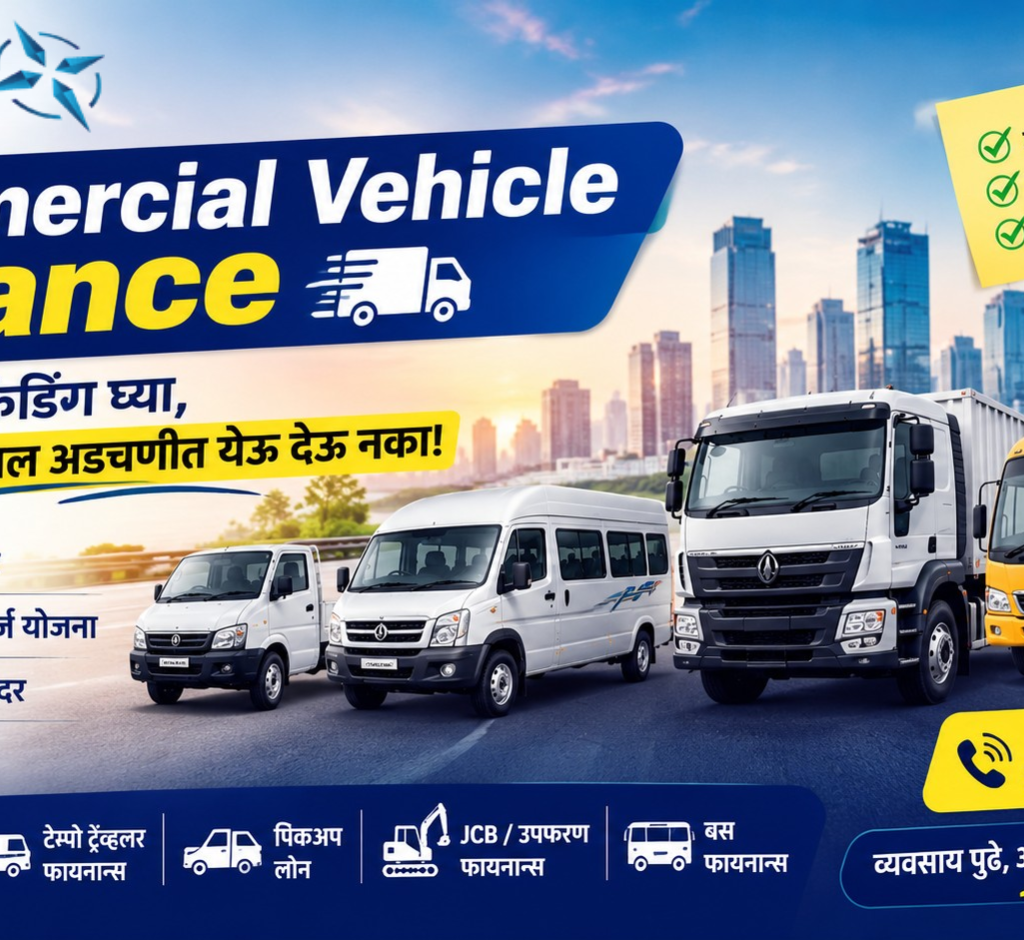
How to Finance a Commercial Vehicle Without Blocking Your Working Capital
For a transport business, logistics company, travel operator, contractor, or self-employed professional, a commercial vehicle is often more than just a vehicle—it is an important income-generating asset.
Whether you are planning to purchase a Tempo Traveller, Pickup, Truck, Bus, JCB, Tractor, or another commercial vehicle, arranging the right financing is an important part of business planning.
A common challenge for business owners is finding the balance between purchasing a vehicle and maintaining enough working capital for day-to-day operations. A large upfront payment can reduce the funds available for fuel, staff salaries, maintenance, inventory, permits, insurance, and other operating expenses.
This is where Commercial Vehicle Finance can become an effective financial planning tool.
Instead of using a large portion of your business savings to purchase a vehicle outright, you can explore financing options that allow you to distribute the purchase cost through structured repayments. This can help preserve liquidity and keep your business ready for regular operational needs and future opportunities.
In this guide, we will explain how to finance a commercial vehicle without unnecessarily blocking your working capital, what financing options to consider, which factors lenders may evaluate, and how to plan the purchase effectively.
What Is Commercial Vehicle Finance?
Commercial Vehicle Finance is a financing facility designed to help eligible individuals and businesses purchase vehicles used for commercial or income-generating purposes.
Depending on the lender and the type of vehicle, financing may be available for:
- Trucks
- Pickups
- Tempo Travellers
- Buses
- Light Commercial Vehicles
- Heavy Commercial Vehicles
- Construction equipment
- JCB and other eligible machinery
- Tractors
- Other eligible commercial vehicles
The financing structure may allow the borrower to pay a portion of the purchase cost upfront while financing the remaining eligible amount through a loan.
The exact loan amount, interest rate, tenure, margin, and other terms depend on the lender’s policies and the applicant’s eligibility.
Why Working Capital Matters When Buying a Commercial Vehicle
Before purchasing a commercial vehicle, many business owners focus primarily on the vehicle’s price. However, the purchase is only one part of the total financial requirement.
A commercial vehicle business also needs funds for regular operational expenses.
These may include:
- Fuel
- Driver salaries
- Vehicle maintenance
- Insurance
- Road tax
- Permits
- Tolls
- Repairs
- Office expenses
- Marketing
- Inventory
- Vendor payments
- Daily business operations
If a large amount of working capital is used for the vehicle purchase, the business may have less liquidity available for these regular expenses.
That is why a Commercial Vehicle Loan can play an important role in financial planning.
By financing the vehicle, a business owner can preserve a greater portion of available cash for operating requirements, while the vehicle itself can begin contributing to business revenue.
How Commercial Vehicle Finance Helps Preserve Working Capital
1. Avoid a Large Upfront Cash Outflow
Buying a commercial vehicle entirely with your own funds can require a significant immediate payment.
With suitable financing, the initial contribution can be planned according to lender terms and your available funds.
This allows you to allocate capital more strategically.
2. Keep Funds Available for Daily Operations
A transport or logistics business requires cash flow every day.
Using financing instead of a full cash purchase may allow the business to maintain funds for:
- Fuel expenses
- Salaries
- Maintenance
- Supplier payments
- Business development
- Emergency operational needs
This can make day-to-day financial management more comfortable.
3. Match Repayment With Business Cash Flow
A commercial vehicle is generally purchased to support business activity and generate income.
Structured EMI payments can help distribute the financing cost over a period of time rather than paying the full vehicle cost at once.
This allows the business owner to plan repayments alongside expected business cash flow.
4. Support Business Expansion
Suppose your current business already has regular demand and you want to add another vehicle.
Using all your available cash for the purchase could limit your ability to invest elsewhere.
With Commercial Vehicle Finance, eligible businesses can explore a financing structure that may allow them to expand their fleet while retaining liquidity for other business requirements.
Choosing the Right Commercial Vehicle Finance Option
Not every financing solution is the same. The right option depends on the vehicle, your business profile, income, repayment capacity, and lender policies.
Before choosing a loan, consider the following.
Loan Amount
Determine how much financing you need and how much you are comfortable contributing from your own funds.
Tenure
Choose a repayment period that aligns with your expected cash flow.
Interest Rate
Compare suitable financing options and understand how the applicable interest rate affects the overall repayment.
Processing Charges
Review processing fees and other applicable charges before finalizing the financing option.
EMI
Make sure the expected EMI fits comfortably within your business’s monthly cash flow.
How to Finance a Commercial Vehicle Step by Step
Step 1: Identify Your Business Requirement
Start by understanding why you need the vehicle.
Are you:
- Expanding your fleet?
- Starting a transport business?
- Increasing delivery capacity?
- Adding passenger transportation services?
- Replacing an existing vehicle?
- Expanding into a new market?
The business objective should guide the financing decision.
Step 2: Choose the Right Vehicle
Different commercial vehicles serve different business purposes.
For example:
Tempo Traveller: tourism, group transportation, employee travel and passenger services.
Pickup: goods transportation and local distribution.
Truck: logistics and long-distance transportation.
Bus: passenger transport and institutional requirements.
JCB / Equipment: construction and infrastructure businesses.
Selecting the right vehicle is important because the vehicle should support revenue generation and business efficiency.
Step 3: Calculate Your Upfront Contribution
Instead of simply asking, “How much loan can I get?”, consider a more important question:
How much cash should I put into the purchase without affecting my working capital?
Maintaining adequate liquidity can be an important part of business planning.
Step 4: Compare Financing Options
Banks and NBFCs may have different eligibility criteria, repayment structures, and financing terms.
Comparing suitable options can help you select financing that aligns with your business requirements.
Step 5: Prepare Your Documents
Having your documents ready can make the financing process more efficient.
Commonly required documents may include:
- Aadhaar Card
- PAN Card
- Address Proof
- Bank Statements
- Income Tax Returns
- Business Proof
- Vehicle Quotation
- Existing loan details, where applicable
- Other lender-specific documents
The exact documentation may vary based on the lender and applicant profile.
Who Can Apply for Commercial Vehicle Finance?
Commercial Vehicle Finance may be suitable for a wide range of applicants, including:
- Transport business owners
- Fleet operators
- Logistics companies
- Self-employed professionals
- Small business owners
- Travel operators
- Tourism businesses
- Contractors
- Goods transportation businesses
- Passenger transportation operators
- Construction businesses
Eligibility depends on the applicant’s profile, vehicle type, financial standing, repayment capacity, and lender criteria.
Documents Required for Commercial Vehicle Finance
Although requirements vary, lenders may commonly ask for the following.
Identity Documents
- Aadhaar Card
- PAN Card
Address Documents
- Aadhaar Card
- Driving Licence
- Passport
- Utility Bill
Financial Documents
- Bank Statements
- Income Tax Returns
- Financial statements, where applicable
Business Documents
- Business registration documents
- GST-related documents, where applicable
- Business proof
- Existing business records
Vehicle Documents
- Vehicle quotation
- Registration-related documents
- Insurance documents, where applicable
A financial consultant can help you understand the exact documentation required for your application.
How to Maintain Working Capital After Buying a Commercial Vehicle
Financing the vehicle is only one part of financial planning. After purchase, maintaining healthy cash flow remains important.
Keep a Working Capital Reserve
Set aside an appropriate amount for regular business expenses before committing to the vehicle purchase.
Track Monthly Cash Flow
Monitor business income and expenses regularly so that EMI commitments remain aligned with actual cash generation.
Separate Business and Personal Finances
Maintaining clear records can make financial planning easier.
Plan for Maintenance
Commercial vehicles require regular maintenance. Include these costs in your business budget.
Consider Seasonal Income
Some transportation businesses experience higher demand during specific seasons, holidays, or travel periods. Your repayment planning should consider these business cycles.
Commercial Vehicle Finance for Different Business Types
Transport Businesses
Fleet operators can use financing to add vehicles while maintaining liquidity for fuel, drivers, repairs, and operations.
Travel and Tourism Businesses
Owners purchasing Tempo Travellers or buses can explore financing options while keeping funds available for marketing, bookings, staff, and maintenance.
Logistics Businesses
Growing delivery and transportation demand may require additional vehicles. Financing can help support fleet expansion without using the entire cash reserve.
Construction Businesses
Businesses requiring JCBs, tractors, or other eligible equipment can explore structured financing to support expansion while managing operational cash flow.
Commercial Vehicle Loan vs Buying With Cash
| Commercial Vehicle Loan | Cash Purchase |
|---|---|
| Purchase cost is financed | Entire purchase amount is paid upfront |
| Funds can remain available for working capital | Larger immediate cash outflow |
| Repayment is spread over a tenure | No loan repayment after purchase |
| Suitable for planned cash-flow management | Suitable when adequate surplus cash is available |
| Loan eligibility and lender terms apply | No lender approval required |
The better choice depends on your business’s financial position, cash reserves, projected income, and long-term goals.
Why Financial Planning Matters Before Taking a Commercial Vehicle Loan
A commercial vehicle should ideally be evaluated not only by its purchase price but also by its expected contribution to the business.
Before financing, ask yourself:
- How will the vehicle generate revenue?
- What will be the expected monthly operating cost?
- What EMI fits comfortably within my cash flow?
- How much working capital should remain available?
- What are my business’s seasonal income patterns?
- What happens if I expand the fleet later?
These questions can help you create a more practical vehicle financing plan.
Why Choose Northwest Capital for Commercial Vehicle Finance?
At Northwest Capital, we help customers across Pune and Maharashtra explore financing options through a network of banks and NBFC partners.
Our team understands that commercial vehicle financing is closely connected to business cash flow. That is why we focus on helping customers understand available financing options based on their vehicle, business profile, and funding requirements.
Why Customers Choose Northwest Capital
- 26+ Years of Industry Experience
- 50+ Bank & NBFC Partners
- Professional financial guidance
- Transparent consultation
- Documentation assistance
- Loan processing support
- Customer-focused service
- Services across Pune and Maharashtra
Whether you are looking for a Commercial Vehicle Loan, Tempo Traveller Finance, Pickup Loan, Truck Finance, or eligible Equipment Finance, our team can help you explore suitable options.
Frequently Asked Questions
1. What is Commercial Vehicle Finance?
Commercial Vehicle Finance is a loan facility that helps eligible applicants purchase vehicles used for business or income-generating activities.
2. Can I finance a commercial vehicle without using all my business savings?
Yes. Suitable financing can help distribute the vehicle purchase cost over a repayment tenure, allowing you to retain funds for working capital.
3. Which commercial vehicles can be financed?
Depending on the lender, financing may be available for trucks, pickups, Tempo Travellers, buses, tractors, JCBs, and other eligible commercial vehicles.
4. Who can apply for a Commercial Vehicle Loan?
Transport operators, business owners, self-employed professionals, fleet owners, tourism businesses, and other eligible applicants may apply.
5. What documents are required?
Common documents include identity proof, PAN, address proof, bank statements, income documents, business proof, and vehicle quotation.
6. How much down payment is required?
The required contribution depends on the vehicle, lender policy, applicant profile, and approved financing structure.
7. Can Commercial Vehicle Finance help with fleet expansion?
Yes. Businesses can explore financing options to add eligible vehicles while maintaining funds for ongoing operations.
8. Is Commercial Vehicle Finance available in Pune?
Yes. Eligible customers in Pune and Maharashtra can explore commercial vehicle financing through banks, NBFCs, and financial consultants.
Conclusion
Buying a commercial vehicle is an important business decision, but it does not always mean using a large portion of your working capital for the purchase.
With the right Commercial Vehicle Finance strategy, business owners can explore ways to acquire an income-generating asset while keeping sufficient funds available for fuel, salaries, maintenance, operations, business development, and future opportunities.
The key is to choose the right vehicle, understand your financial requirements, assess repayment capacity, compare suitable financing options, and plan your working capital before finalizing the purchase.
For businesses in Pune and Maharashtra, Northwest Capital can help you explore suitable Commercial Vehicle Loan options through multiple banks and NBFC partners.
Finance your commercial vehicle smartly, keep your working capital working, and move your business forward.